Retro Godzilla Illustrations: Unleashing Creative Power for Modern Projects
There's something undeniably captivating about the clash of eras—where mid-century monster movie charm meets contemporary design needs. Retro Godzilla Illustrations brings that collision to life, offering a collection that channels the bold, graphic energy of classic kaiju cinema while remaining surprisingly versatile for today's creative landscape. Whether you're designing a children's book cover, crafting merchandise for an Easter-themed product line, or building out a social media campaign, this asset pack delivers personality in spades.
What Makes These Illustrations Stand Out
At its core, Retro Godzilla Illustrations draws from the visual language of 1950s and 1960s science fiction posters, vintage comic book art, and the gritty texture of early screen printing. The designs feature bold outlines, halftone dot patterns, and a limited but punchy color palette that evokes nostalgia without feeling dated. Each illustration captures Godzilla in dynamic poses—roaring against cityscapes, stomping through skylines, or rendered in playful, stylized forms suitable for younger audiences.
The personality here is unmistakable. These aren't hyper-realistic digital renders or minimalist vector icons. They carry weight, texture, and a sense of handcrafted authenticity. The retro aesthetic gives them warmth and character that modern flat design often lacks. For designers working on projects where emotional connection and visual storytelling matter, this collection provides a strong foundation.
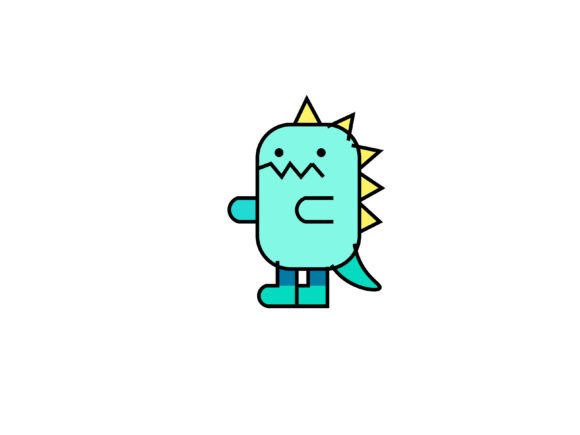
What's particularly useful is the range within the set. Some illustrations lean into the dramatic, monster-movie intensity—perfect for edgier branding or adult-oriented merchandise. Others soften the approach with rounded shapes and friendlier expressions, making them genuinely suitable for children's book design and Easter-themed products. That duality is rare in a single asset pack and significantly extends its practical value.
Practical Applications Across Industries
The included file formats—AI, EPS, JPG at 300dpi, and PNG at 300dpi—cover virtually every production scenario a designer or entrepreneur might encounter. The vector formats (AI and EPS) allow infinite scaling without quality loss, which is essential for large-format printing on tote bags, pillows, or printed paper goods. The high-resolution raster files work seamlessly for social media graphics, phone case mockups, and digital publishing.
Here's where Retro Godzilla Illustrations truly shines in real-world use:
- Book and Notebook Design: Children's book covers, chapter headings, and interior spot illustrations benefit enormously from the retro monster aesthetic. The playful variants work well for Easter-themed activity books or seasonal story collections, while the more dramatic pieces suit middle-grade adventure novels.
- Apparel and Accessories: T-shirt designers will appreciate the bold, high-contrast compositions that translate well to screen printing and direct-to-garment processes. Phone cases, tote bags, and pillows become instant conversation starters when adorned with these vintage-style illustrations.
- Pattern Design: The individual illustration elements can be extracted and repeated to create seamless patterns for wrapping paper, fabric prints, and stationery sets. The retro texture elements integrate beautifully into repeat patterns.
- Social Media and Digital Marketing: Instagram posts, Facebook banners, Pinterest pins, and YouTube thumbnails all benefit from the instant visual impact these illustrations provide. The bold style cuts through algorithmic noise and stops the scroll.
- Printed Paper Goods: Greeting cards, posters, stickers, and planners gain character and shelf appeal. The Easter-appropriate variants make seasonal product lines straightforward to develop.
For small business owners and independent creators, the commercial licensing included with the download removes a significant barrier. You can use these designs on products you sell without navigating complex royalty structures—a practical consideration that matters when you're building a brand or launching a product line.
Design Strategy: Making the Most of a Retro Aesthetic
Working with retro illustration assets requires a thoughtful approach to maintain coherence across your project. A few observations from practical experience:
Font pairing matters enormously. If you're combining Retro Godzilla Illustrations with typography, choose typefaces that complement rather than compete. A bold sans serif font with geometric qualities echoes the mid-century aesthetic naturally. Alternatively, a slightly weathered script font can add a hand-lettered quality that reinforces the vintage feel. Avoid pairing these illustrations with ultra-modern, minimalist typography—the visual tension tends to feel unintentional rather than dynamic.
Color palette decisions shape perception. The illustrations work best when your surrounding design elements share a similar tonal range. Muted earth tones, classic reds and blues, or a desaturated palette with one or two accent colors all support the retro mood. If you're adapting the illustrations for Easter themes, consider swapping in pastel accent colors while keeping the core illustration tones intact.
Scale and hierarchy deserve attention. Because these illustrations carry significant visual weight—thick outlines, dense textures, strong silhouettes—they naturally command attention in any composition. Use them as primary focal points rather than subtle background elements. On a T-shirt, let the illustration breathe. On a book cover, give it room to establish tone before layering in text and supporting graphics.
Consistency across touchpoints builds brand recognition. If you're using these illustrations as part of a brand identity system—say, for a toy company, a retro-themed café, or a creative studio—select two or three variants from the collection and use them consistently. Repeating the same visual language across your website, packaging, social media graphics, and printed materials creates a cohesive brand experience that audiences remember.
Test before committing to large production runs. Print a sample of your phone case design. Mock up the tote bag at actual size. View the social media graphic on a mobile screen. The retro texture details that look stunning on a 27-inch monitor might lose definition at smaller scales or on certain substrates. The included 300dpi PNG and JPG files give you plenty of resolution to work with, but physical testing remains the gold standard for print-on-demand and merchandise production.
Evaluating Fit for Your Next Project
Not every project calls for retro kaiju illustrations, and recognizing that upfront saves time and revision cycles. Ask yourself a few honest questions before diving in:
- Does your target audience appreciate nostalgia, pop culture references, or vintage aesthetics? If your demographic skews toward adults aged 25–45 with interests in design, film, gaming, or creative hobbies, the answer is likely yes.
- Does the project's tone accommodate bold, character-driven visuals? Corporate reports and medical brochures probably aren't the right context. Event posters, product packaging, editorial layouts, and lifestyle branding absolutely are.
- Can you maintain the retro visual language consistently? If the illustration style clashes with existing brand guidelines or partner assets, consider whether adaptation is realistic or whether a different design direction serves the project better.
Retro Godzilla Illustrations represents a specific aesthetic niche, but within that niche, its applications are remarkably broad. From Easter-themed children's activity books to limited-edition phone case designs, from social media campaign graphics to artisan tote bag prints, the collection provides genuine creative value for designers, marketers, publishers, and entrepreneurs willing to lean into its distinctive visual personality.
The included file formats ensure you're production-ready across digital and print channels. The commercial licensing supports business use. And the sheer character of the illustrations gives your projects an emotional edge that stock imagery and generic vectors simply cannot match.